If leveling up your dog-training game is one of your New Year’s resolutions for 2026, then we’ve got everything you need to make it happen.
Here are the most impactful habits to bring into the new year.
1. Predictable Mini-Routines
Let’s start with the elephant in the room: dogs thrive when they know what to expect.
You don’t need a military-type rigid schedule, but it does help to be punctual and have clear routines set into your days. Like always having:
-
a morning walk before breakfast
-
a chew session at the same time each day
-
a quiet bedtime ritual
Predictability reduces reactivity, whining, and general restlessness.
It makes your dog feel safe, which automatically improves behavior.
2. High-Value Treats Matter a Lot More Than People Think
Not all rewards work equally. For many dogs, kibble outside is like being paid in pennies during a crisis. It’s important to figure out how your dog values different treats. Do they prefer cheese? Sweet potato? Meat? Find out the treat hierarchy and use it accordingly. When the stakes are high, the reward should be as well. For example, the dog park has far more distractions than your living room, so the reward here should be higher. Are you asking your dog to do something they are already quite used to doing? Then the reward value might be lower.
In short: The reward must match the difficulty, which will change depending on the environment that you are in and how new the command is.
3. Train When Your Dog Has Already Released Some Energy
A tired dog is often more regulated, and training after a walk or play session can lead to quicker, cleaner results.
Many dog parents discover that their best training sessions happen when their dog is:
-
slightly tired
-
slightly hungry
-
already “emotionally settled”
It’s a game changer for focus and impulse control.
4. Use a Long Line to Build Off-Leash Reliability (Safely)
If your dog forgets about recall when out and about, then a long line is one of the most underrated training tools. It gives your dog space to explore while keeping you in control while you practice calling your dog.
Benefits:
-
safer learning
-
smoother recall training
-
prevents rehearsing bad habits
-
allows gradual transition to real freedom
Once your dog understands how to check in, follow cues, and return despite distractions, off-leash trust becomes possible. Just make sure not to rush the process.
5. Make Sure To Tell Your Dog ‘No’.
Many dog parents feel uncomfortable denying their dog anything.
We get it: you adore your dog and want them to feel happy, safe, and loved.
But a dog who never hears “no” can become stressed, confused, and overwhelmed.
Not because they’re spoiled, but because they don’t know where the limits are.
Dogs, like people, need boundaries.
A clear “this is allowed” and “this is not” makes their world predictable.
Without occasional denial, many dogs begin to think:
-
“Maybe I’m in charge here.”
-
“Maybe I have to make the decisions.”
-
“Maybe I need to manage this situation myself.”
And dogs who take on that “leadership pressure” often become more reactive, demanding, anxious and less responsive to cues.
So yes, saying “no” in a calm, consistent way is not just acceptable… healthy, loving, and necessary.
It gives your dog the structure they deeply understand.
How to tell your dog “No” in a way they understand
Dogs don’t understand “no” as a complete concept.
They don’t hear the word and think, “Ah yes, that means stop forever.”
“No” simply interrupts the moment. What matters most is what you do next.
If your dog ignores “no,” it’s usually because:
-
the environment is too stimulating
-
you haven’t shown them the alternative behavior
-
the way you are telling them ‘no’ might be seen as a reward
-
the unwanted behavior is rewarding by itself
-
they don’t understand what you want instead
This is why saying “no” alone doesn’t teach anything.
Here’s what to do after:
-
Interrupt
“no,” or even a “uh-uh,” to momentarily break focus. -
Redirect
Immediately show your dog what to do instead:
-
sit
-
go to their safe space
-
leave it
-
come toward you
-
bring a toy
-
Reward the right choice
The reward turns confusion into clarity. It teaches your dog: “This behavior works better.”
6. Slowly Increase Difficulty (Instead of Jumping Levels)
If your dog gets overly excited, anxious, or reactive when they see certain triggers like other dogs, people, bikes, scooters, or anything that moves quickly, then the first step is to make the environment easier. Notice when your dog gets triggered and what the distance between your dog and the trigger is. Add distance until your dog can notice the trigger without freaking out. This means that during walks and training sessions, you have to be just as alert as your dog, if not more.
The golden rule of behavior training:
Distance is your friend.
If your dog reacts to other dogs at 5 meters, begin practicing at 10. If they freeze or panic when someone walks by, add more space until they can stay calm and think. You want to work at a distance where your dog can notice the trigger without tipping into stress or excitement.
What to do at that comfortable distance:
As soon as your dog sees the trigger, before barking, pulling, or panicking, calmly mark it with “yes!” and reward. This timing teaches them:
-
noticing is good
-
staying calm pays off
-
looking back at you is the next step
Over time, their emotional response softens, and you can slowly decrease the distance.
This prevents overwhelm and builds real confidence.
7. Furniture Rules: Why Height Matters to Dogs
This part of dog behavior is genuinely fascinating, and often misunderstood.
In canine social structure, elevated spaces function as positions of oversight and responsibility. Dogs instinctively associate height with monitoring the environment, controlling interactions and deciding who approaches.
So when a dog repeatedly claims the sofa backrest, armrest, or the highest cushion, they may (without you realizing it) take on a role that feels like their responsibility:
“I’m supervising. I’m in charge. I decide what happens next.”
When this mindset develops, you may start to see:
-
ignoring cues because the dog thinks they’re the decision-maker
-
guarding of people, toys, or spaces
-
frustration or overstimulation when someone approaches them on the furniture
-
trouble settling because they feel “on duty”
It’s not misbehavior, but a misunderstanding of roles from the dog’s perspective.
Would a designated sofa spot help? Yes, but only under the right conditions.
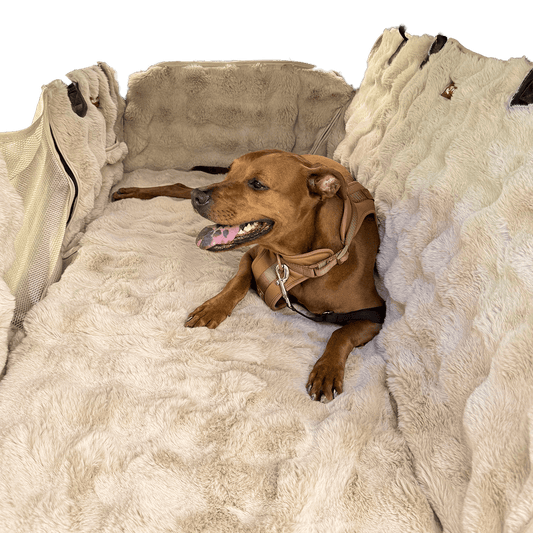
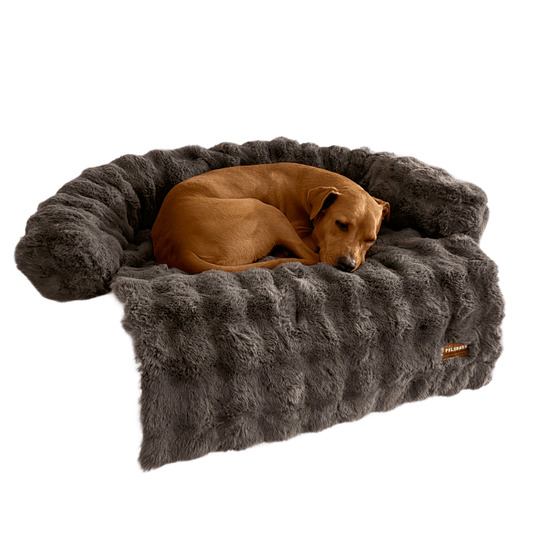
A designated sofa spot (like a sofa bed or a specific blanket) can help clarify expectations. It gives your dog a clear place that belongs to them while still keeping the rest of the sofa structured.
This works well because:
-
Your dog learns where they are allowed to rest
-
It reduces guarding of the entire couch
-
It helps them settle instead of pacing or claiming space
-
It reinforces that you control access, not them
But keep in mind: A designated spot only works if you’re consistent. If your dog is allowed anywhere on the sofa sometimes and not other times, the rule disappears. Clarity, not furniture, is what changes behavior.
If you don’t have a sofa bed, Invite a simple structure to keep everything balanced:
-
Invite them up rather than letting them claim the space independently.
-
Ask for a sit or wait before they join you. This reinforces that access comes through you.
-
Guide them down calmly when needed so they learn it’s not “their” territory.
Your dog still gets the cozy spot they love, without slipping into a role that puts unnecessary pressure on them.
8. Mealtime Structure: Why Free-Feeding Causes Confusion
Food is the most precious resource in your dog’s world. Leaving it out all day removes predictability and makes it hard for dogs to regulate themselves.
A simple rule:
-
Offer food
-
Give 15 minutes
-
If they don’t eat, remove until next mealtime
This is not to punish them, it’s clear communication in a language dogs understand. Which can reduce anxiety, picky eating, begging and tension around food.
9. Create or Upgrade Their Safe Place
Make sure your dog has a place they find calming and where they can “switch off.” If their bed is mainly used for punishment, it is not a place they will go for comfort.
Give them a dedicated spot:
-
a calming bed
-
a cozy corner
-
a crate set up like a den
And make sure to make positive memories here. Reward them for being in their bed, cuddle them there and give them praise while they spend time here. With repetition, it becomes their natural reset zone, a place where overthinking and overstimulation stop. A dog who knows where to relax is a dog who behaves better everywhere else.
10. When You Love Your Dog So Much That Boundaries Feel Mean
We all love our dogs, and that compassion is beautiful. But dogs feel safest when someone else is clearly in charge of resources. This way it becomes clear to your dog who is responsible for keeping them safe, fed and happy.
Boundaries tell your dog:
-
“You don’t have to manage this.”
-
“You don’t have to control the environment.”
-
“I’ve got it.”
This reduces reactivity, guarding, and overexcitement more than any treat ever could. Being consistent in your rules is one of the best ways to show your dog you love them.
Final Thought
Real transformation comes from small, steady habits woven into everyday life. Pick just two or three of these ideas to focus on as you move into January, and give them the consistency your dog can rely on.
You’ll start to notice subtle shifts first: a quicker check-in on walks, a calmer response to triggers, a softer body when visitors arrive. Those small wins turn into bigger ones as your dog’s confidence grows, their emotions settle, and your connection deepens.
2026 can be the year your dog stops ignoring you, stops jumping on guests, and stops acting like they pay rent ;) but more importantly, it can be the year you both feel more in sync, more at ease, and more connected than ever.
You’ve got this. Good luck, and here’s to a calmer, happier, better-behaved dog in the new year.
Warmly, Elle from team Pelsbarn