As the days grow longer and we prepare to "spring forward," you might notice your furry friend acting a little... off. Maybe your cat is staging a 5:00 AM protest for breakfast, or your dog is suddenly napping in the afternoon like they just ran a marathon.
And while our beds provide the ultimate comfort, even the best sleep surface can't override the biological shifts that occur when the seasons change. Here is the data-driven reality of why spring affects your pet's rest and how you can help them adjust.
1. The "Social Jet Lag" of Daylight Savings
While humans look at a clock to know it’s 7:00 AM, pets rely on their circadian rhythm: a finely tuned internal biological clock synced to environmental cues, primarily the sun.
-
Hormonal Shift: Light exposure influences the production of melatonin (the sleep-promoting hormone) and serotonin (which regulates mood and alertness). When we move the clocks forward, we create a "mismatch" between the sun's position and our household routines.
-
Mealtime Anxiety: Research shows that pets, particularly dogs with rigid schedules, can experience stress when feeding times shift abruptly. Their bodies expect metabolic activity at specific intervals; a one-hour delay can lead to pacing, whining, or "counter-surfing."
-
Sleep Fragmentation: Studies on companion animals show that while they are highly adaptable, abrupt changes in human activity can lead to "sleep fragmentation" (smaller, less restful bouts of sleep) for up to a week following a time change.
2. Increased Photoperiod and Energy Expenditure
Spring brings an increase in the photoperiod (the length of time an organism is exposed to light). This has a direct physiological impact on us, but also on our furry friends:
-
Sensory Overload: Spring is a high-stimuli season. Emerging wildlife and blooming flora release a flood of new pheromones and scents. For a dog, a "simple walk" in spring requires significantly more cognitive processing than a winter walk, topped with a sudden schedule change, leading to higher levels of mental fatigue.
-
The "Pollen Poop-Out": Seasonal allergies aren't just for humans. If your pet is sneezing or grooming more frequently due to environmental allergens, their immune system is working overtime. This physiological stress often manifests as increased lethargy or longer daytime naps as the body seeks to recover.

3. Thermoregulation and Resting Spots
As ambient temperatures rise, pets must work harder to maintain their basal body temperature.
-
Heat Dissipation: Dogs don't sweat like us humans; they rely on panting and seeking "conductive cooling" (laying on cool surfaces). You may notice your pet moving away from their usual plush bed toward a cooler tile floor or their Pelsbarn Cooling Mat to regulate their temperature during naps.
-
Energy Conservation: Lying in a sunbeam isn't just about comfort… It's a survival strategy. By using external heat to maintain body temperature, dogs conserve metabolic energy. However, as spring days warm up, they may transition from "sun-seeking" to "shade-seeking" mid-nap.
How to Help Your Pet "Spring" Into the New Routine
Gradual transitions are the most effective way to mitigate "social jet lag", so instead of immediately keeping to the original schedule, try:
-
The 15-Minute Increment: Instead of shifting your schedule by a full hour on Monday, move feeding and walk times by 15 minutes every two days.
-
Morning Sunlight Exposure: Take your dog outside or open the blinds as soon as you wake up. Direct, unfiltered sunlight helps suppress melatonin production, signaling to their brain that the day has officially started.
-
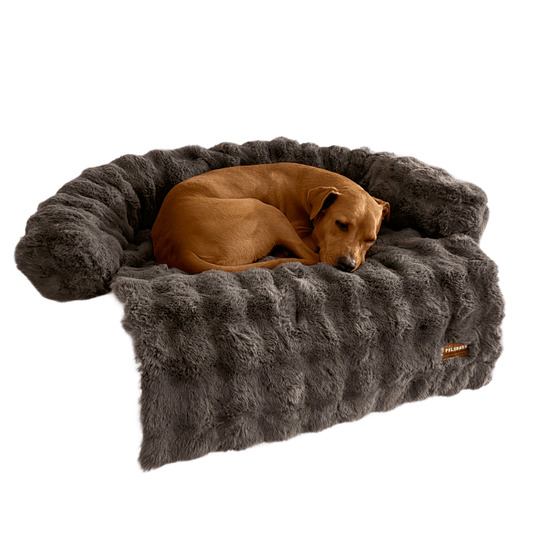
Supportive Resting Zones: Ensure your pet has a variety of "micro-climates" to choose from. A supportive, soft bed for joint health and a cooler area for when the afternoon sun gets too intense.
Pelsbarn Tip: Quality of rest is just as important as quantity. During seasonal transitions, an orthopedic bed provides the consistent pressure relief needed to help your pet reach REM sleep faster, ensuring they wake up truly restored despite the changing clock.
Final Thoughts: A Little Patience Goes a Long Way
Spring is a season of renewal, but it’s also a season of recalibration. While the science explains the why behind the restless pacing or the extra-long afternoon snoozes, the solution is often just a bit of extra grace.
Our pets live to be in sync with us. When our schedules shift, they do their best to keep up, even when their internal clocks are telling them something different. By providing a consistent routine, a sunny spot to dream, and a supportive bed to retreat to, you’re giving your dog exactly what they need to transition smoothly.
So, if you find your furry friend hogging the cool kitchen tiles or snoozing through their usual playtime this week, don’t worry. Nothing’s wrong, they’re just finding their spring rhythm.
Warmly,
Elle from team Pelsbarn