When vets x-ray a dog for an unrelated reason — a routine dental cleaning, say — about 60% of the films show arthritis.[1]
Only around 2.5% of dogs ever have that diagnosis written in their file.[2]
The gap between those two numbers causes too many dogs unnecessary pain.
Dogs don't limp early. They compensate. And what's left over — slower on walks, a pause at the stairs, no more jumping on the couch — we read as "he's just getting old."
That is the moment the problem is most treatable, but least treated.
Because it doesn't stay in one joint. The dog shifts weight onto the good legs, and those joints start wearing too. Less movement means the muscle that was holding the joint steady wastes away. Less movement plus the same food means weight — and extra weight is the one factor with the strongest evidence for making arthritis worse.[5]
Over time the pain itself changes. The nervous system turns the volume up, so the same joint hurts more than it used to, and the medication that would have worked a year earlier works less.
In long-term follow-up studies, joint disease is one of the most common documented reasons dogs are put to sleep.[8][10]
And the flip side — the reason I'm writing this — is that the disease is progressive, but how fast it goes is very much changeable. Early, consistent care is the difference between a dog that is comfortable at 12 and one that had to be put down at 9.[10]

Most owners who notice do the sensible things. Shorter walks, a joint supplement or a ramp for the car.
They help, but they don't touch the biggest part of your dog's day: the hours spent lying down.
Two things happen during long stillness. Joint fluid thins and the joint capsule tightens — that is where the first-steps-of-the-morning stiffness comes from. And on a hard floor, or a thin bed, the whole body weight sits on a few bony points: hips, elbows, shoulders.
An arthritic joint is pressure-sensitive. So the dog shifts. And shifts. And shifts again. Broken sleep lowers pain tolerance the next day, so the stiff morning gets worse, not better.
If your dog is over 8, your fluffy companion likely suffers from this too. In one study of dogs that age, 57% had arthritis in the elbow and 36% in the hip.[3] Labradors, Golden Retrievers, Shepherds and the other large breeds suffer the most[6][7] — but small dogs are not exempt.
The bed most of us buy makes it worse
Here is the part nobody tells you.
The bed most of us buy for an older dog — the cheap "orthopedic" foam bed from China — makes this worse, not better.
Low-density foam compresses until the dog is effectively lying on the floor through a thin layer. It gives way exactly where the hips and elbows press down.[12]
It is also soft and sinking — the hardest kind of surface for a stiff dog to stand up out of.
Whether a bed is genuinely orthopedic comes down to one thing: how dense and how thick the foam is relative to your dog's weight. Not the word on the label.
Two in the morning, on the kitchen tiles
I found this out the way most people do — at two in the morning.
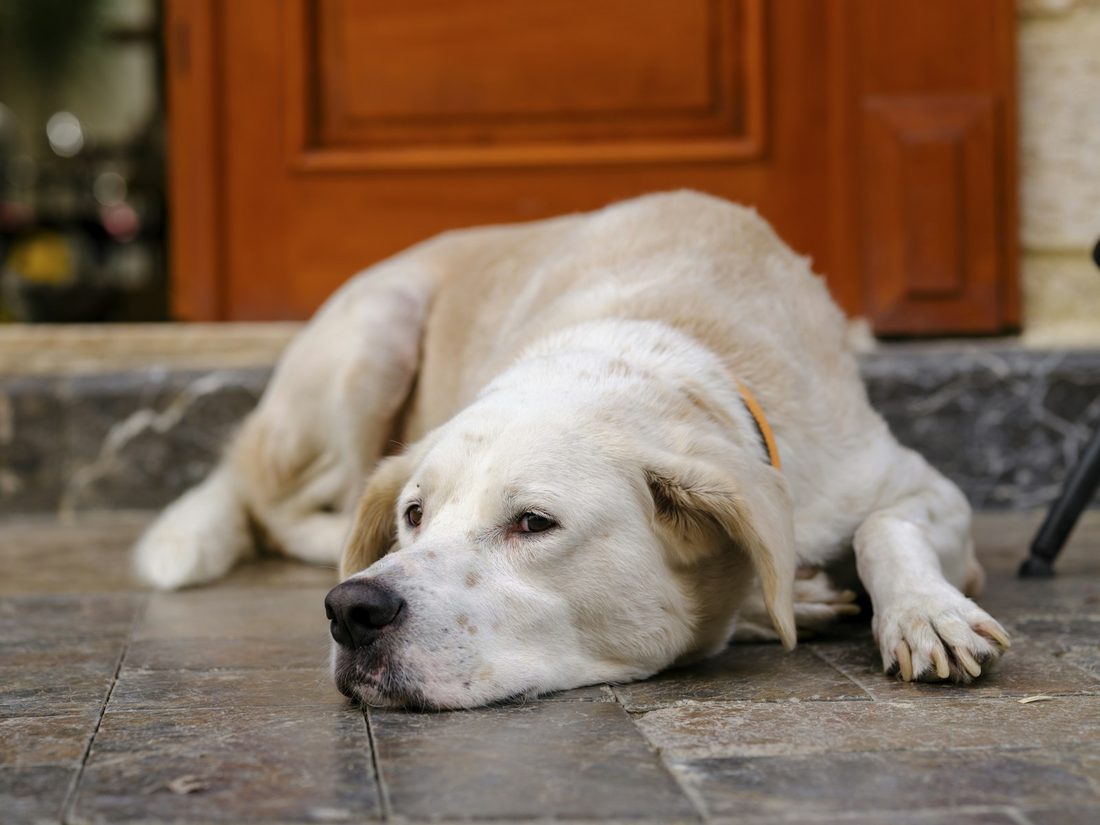
Bruno is my Labrador. He turned nine last spring.
One night I woke up to the sound of his nails on the kitchen tiles. Circling. Lying down. Getting up again. Circling. He had been doing it for months — I had just never been awake for it.
The next morning it took him three tries to stand. I put it down to age, like everyone does.
Then I did what you are not supposed to do and looked it up. Everything pointed at the same place: the floor he was sleeping on.
So I bought a bed. A well-reviewed "orthopedic" one. Within a month it had a Bruno-shaped dent in the middle and he was back on the tiles next to it.
The second one lasted about as long.
The third is the one this article is about.
The hospital-mattress principle
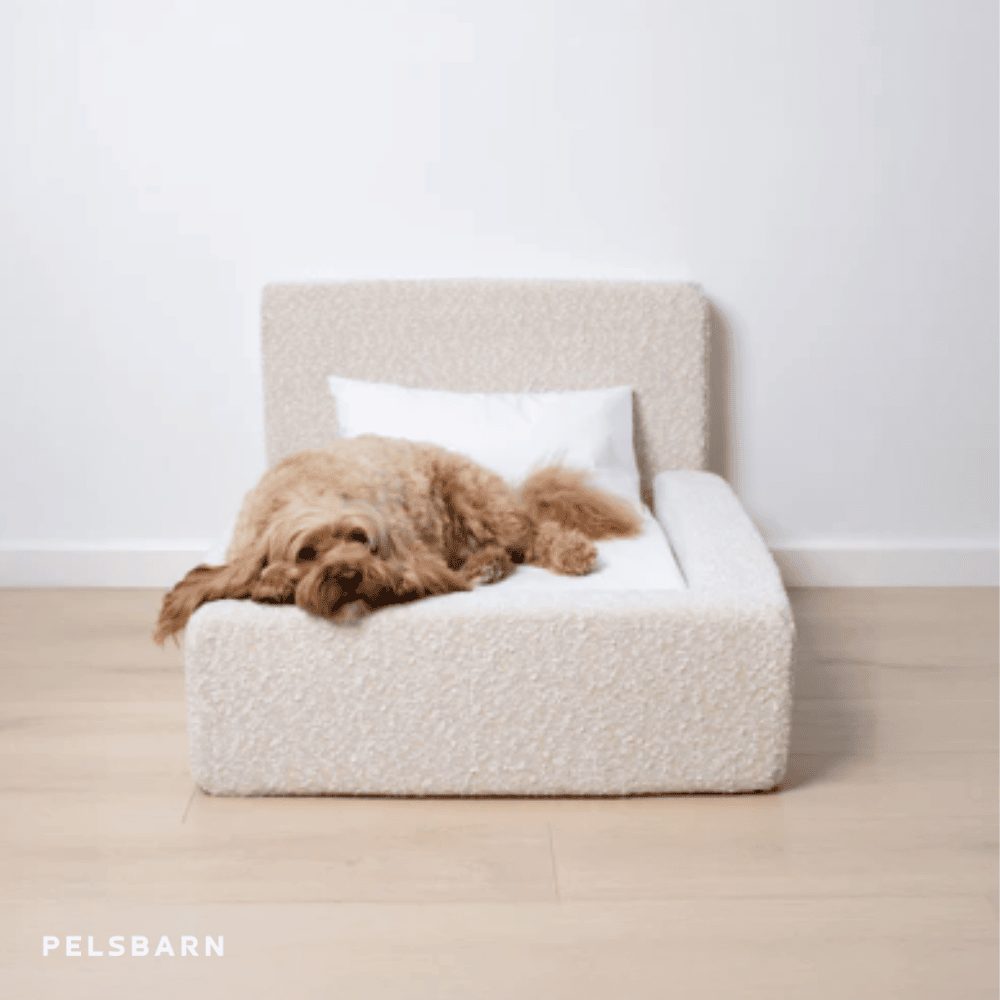
It's called the Real Dog Bed, by Pelsbarn.
It works on what I've started calling the hospital-mattress principle.
A dog on a hard floor carries its weight on a handful of contact points. Memory foam that conforms to the body spreads that same weight over a far larger area, so the force on any one joint drops. It is the same principle as the pressure-relieving mattresses used for bedridden patients — and it is the best-established part of what an orthopedic bed does.
 Up to 5 in of memory foam
The Real Dog Bed has up to 5 inches of memory foam in the mattress, on a base that lifts your dog off a cold floor — and cold stiffens joints too.
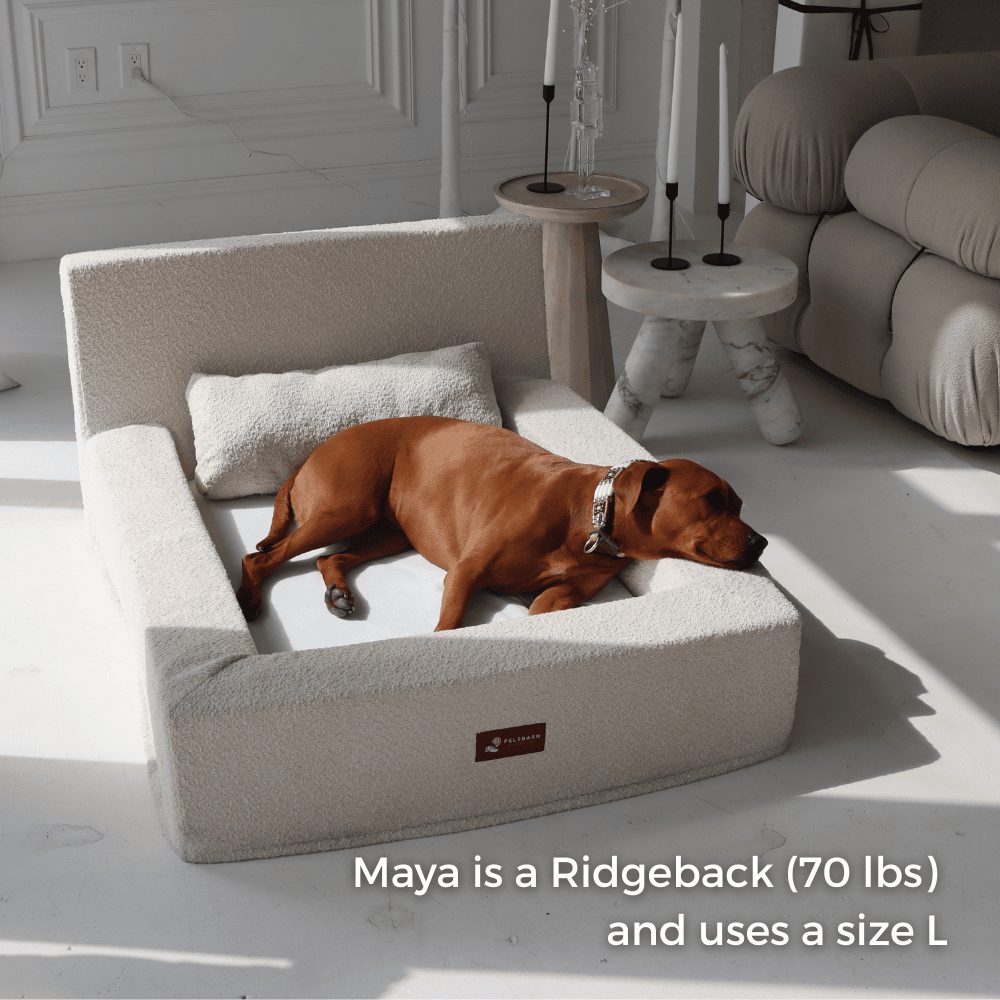
The raised sides do two jobs: head and neck support, and something firm for a stiff dog to push against when getting up. A soft, sinking bed is the opposite.
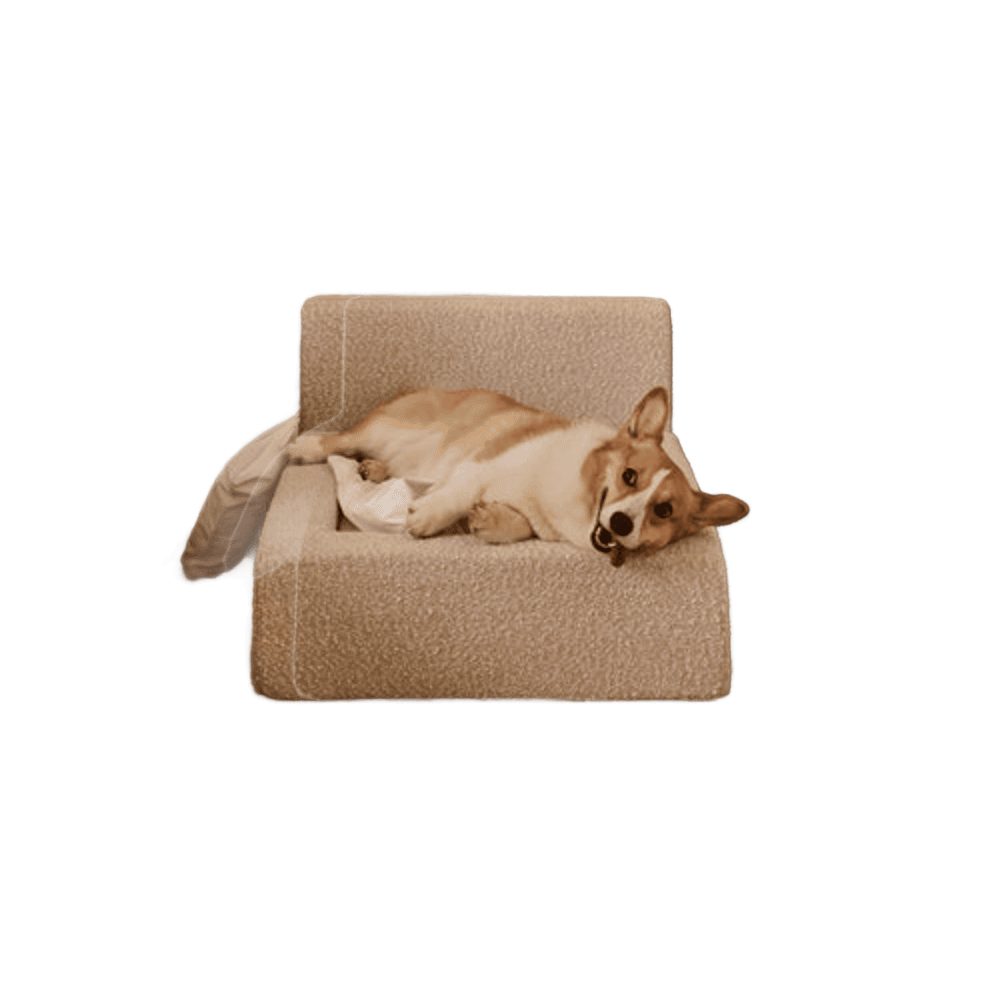
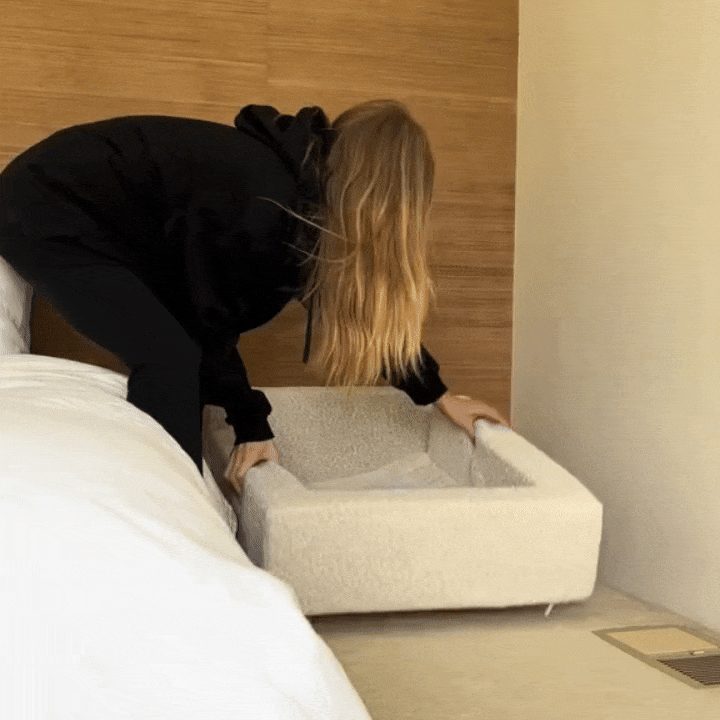
There's a waterproof inner layer for accidents — which matter more with an older dog — and the cover comes off and goes in the washing machine.
And this really matters more than anything I could tell you: published veterinary guidelines for managing arthritis in dogs list supportive, orthopedic bedding as standard care.[9]
It will not reverse arthritis. Nothing does. What it changes is the hours your dog spends lying on it — and the morning after.
Pelsbarn — the brand that puts shelter dogs on the bill

The people behind this bed are Fay and Daniel. With every purchase, Pelsbarn donates to dog shelters. In 2024 that came to $23,000 to no-kill shelters.
And it is made in the USA — not a marketplace knock-off.
They stand behind it with a 1-year warranty and a 14-day return policy — if the bed isn't right for your dog, send it back.

They sell it through their own website only — no middlemen — and right now it is 30% off there.
Free shipping within the USA, and an interest-free instalment option at checkout.
Click here to see the Real Dog Bed on the official Pelsbarn website


Sure, it is not the $40 foam bed. But we are not buying a doormat here — we are talking about the surface your dog spends most of every day on, for the years that are left.
Bruno has been on his for four months now. I am not going to tell you he is a puppy again — he is nine, and no bed in the world can change that. But the circling stopped in the first week, and the three tries to stand are back down to one.
Sarah Mitchell

Sarah Mitchell
See the Real Dog Bed on the official Pelsbarn website ›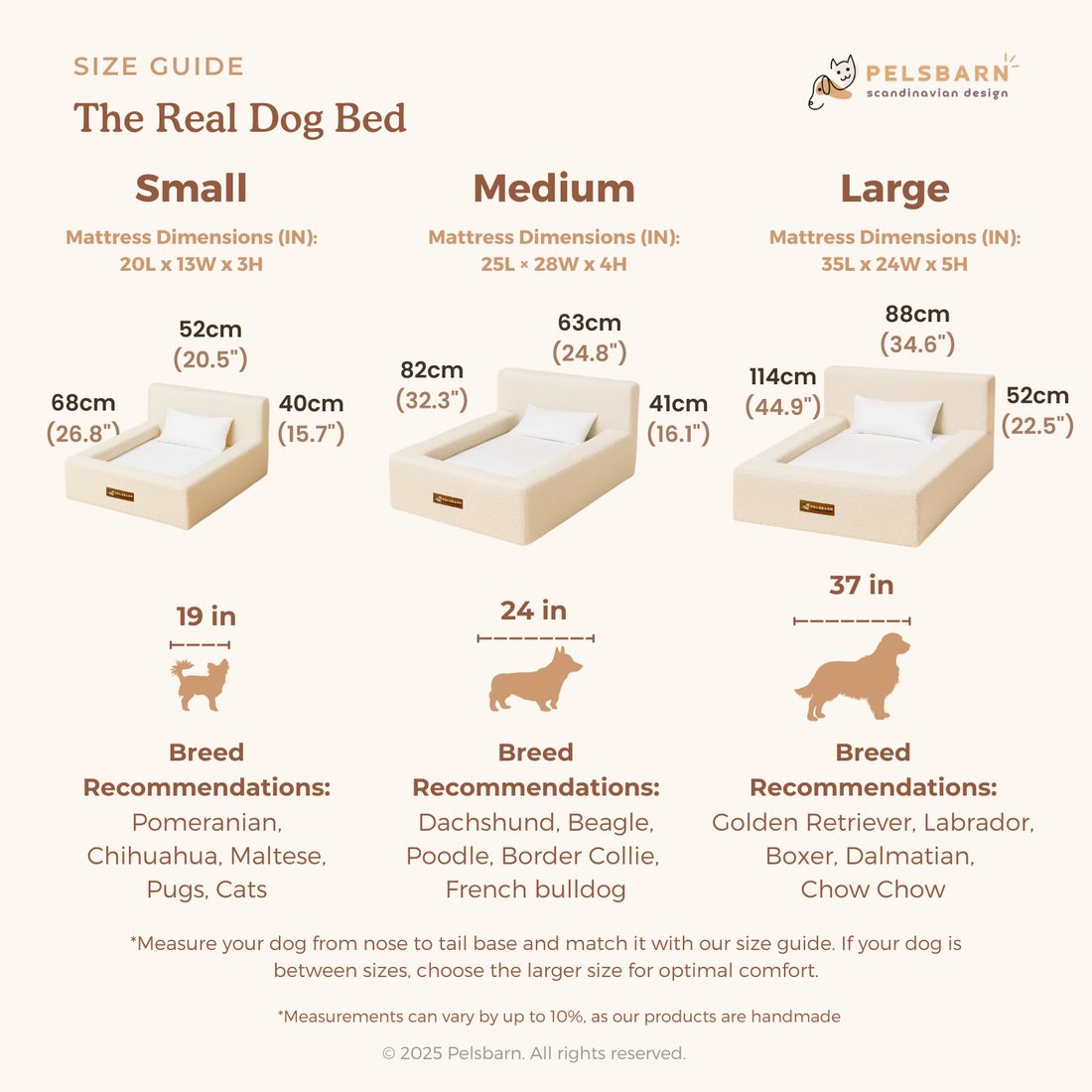
Reader comments
This bed is legit! My old boy used to groan getting up, but since we got this orthopedic foam, he pops right up. The memory foam quality is fantastic, and it actually looks good in our living room. Total win-win!
My dog is experiencing a truly therapeutic sleep with this bed. My retired working dog has hip dysplasia and used to circle and shift all night. Now, he settles down almost instantly. I've noticed a significant improvement in his stiffness in the mornings. This isn't just a bed; it's therapy. Thank you for making such a quality product.
My dog is 14 and has been slowing down a lot. Since getting this bed, he rests easier and doesn't limp as much when he wakes up. That kind of improvement is priceless.
Finally, a bed that doesn't just squish flat after a month. The joint pressure relief is noticeable. I got the medium, and it's perfect for curling up or sprawling out a bit.
The vet recommended label is not a gimmick! Our veterinarian specifically mentioned looking for high-density orthopedic foam for our corgi's back issues. This bed meets all the criteria. The support is incredible, and the fact that it's high enough off the ground seems to help her mobility. Peace of mind and a comfy pup.
My 12 year old dog has arthritis in his hips and usually struggles to get comfortable. With this bed, he lays down quickly and stays asleep for hours. It honestly feels like it has given him a new lease on life.
Outstanding support. My dog is a heavy fellow, and this bed completely supports his weight without flattening out. Zero compression issues.
I got the medium size and wish I'd gotten the large, but the quality of the foam is superb. I can't feel the floor underneath at all.
This bed is better than I expected, and I expected a lot! Saw this on Instagram and finally took the plunge. My lab, Charlie, is a chewer, but the durable cover is surprisingly tough. The memory foam is firm yet supportive. The best part? No more loud groans as he tries to get comfortable. Pure comfort for our old boy.
A bit bigger than expected, but honestly I'm glad it gives my dog room to stretch out
My girl has terrible hips, and this bed is a game-changer. The supportive foam makes a difference in her morning limp. Highest quality foam I've seen.