The science behind bolsters, pressure, and canine emotional regulation
Dogs don’t look for comfort randomly. The places they choose to rest (tucked against a wall, wedged beside the couch, pressed against your legs) reflect how their nervous system searches for safety. For anxious dogs especially, rest is not just about softness. It’s about feeling contained, supported, and able to let their guard down.
Raised edges on dog beds may seem like a design detail, but for many dogs they serve a much deeper purpose. They replicate environmental cues that help the canine nervous system shift out of constant alertness and into true rest.
Anxiety in dogs is not a behavioral flaw or a lack of training. It is a physiological state. When a dog feels uncertain or overstimulated, their body activates the sympathetic nervous system, the fight-or-flight response. Heart rate increases, muscles tense, cortisol rises, and the dog remains on standby, even while lying down. For dogs who live in this state often, simply “lying on a soft surface” is not enough to trigger relaxation.
One of the most powerful regulators of a dog’s nervous system is their environment. In natural settings, canines rarely sleep in open, exposed areas. They choose resting spots that limit how much of the world they need to monitor: shallow dens, corners, or spaces where their body is supported on more than one side. This reduces sensory input and perceived vulnerability. For humans, it is not that different. We often prefer to put our beds and couches against the wall rather than in the centre of a room, where we are exposed from all corners.

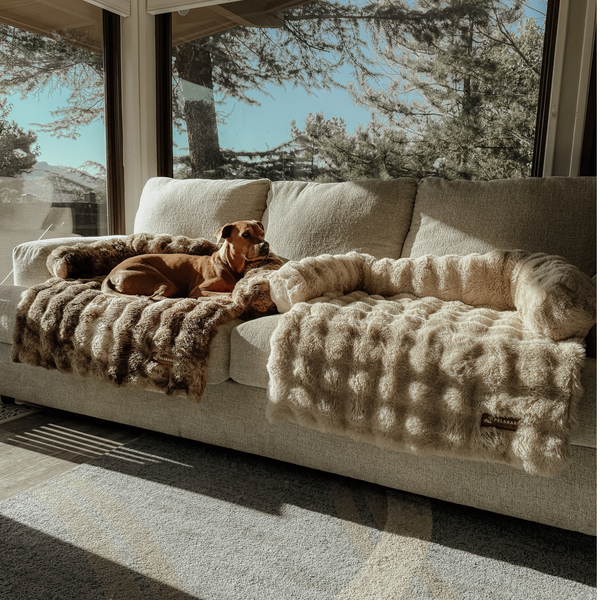
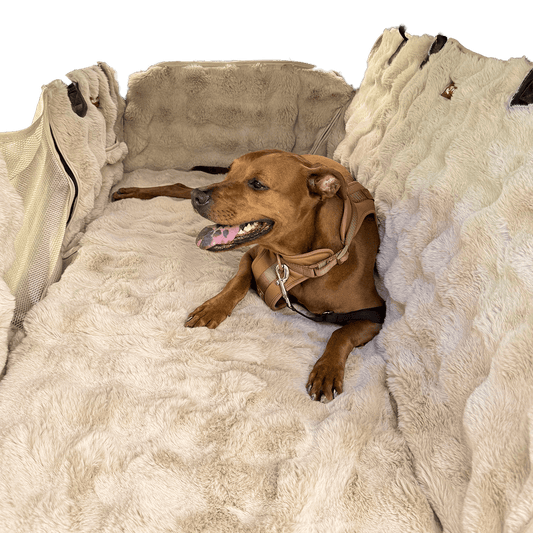
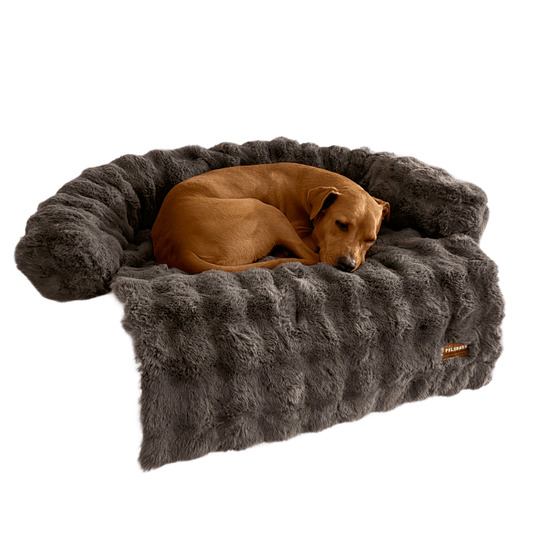
Raised edges recreate a similar effect in a domestic environment. By defining physical boundaries around a dog’s body, they reduce the number of open angles they have to scan. Fewer visual and spatial stimuli mean less information for the brain to process, which helps lower baseline vigilance. When the brain no longer feels the need to stay alert, the parasympathetic nervous system, responsible for rest and recovery, can take over.
There is also a physical component at play. Gentle, evenly distributed pressure has been shown across mammalian species to have a calming effect on the nervous system. This principle is used in infant swaddling, weighted blankets for humans, and compression garments for animals. When a dog leans into a raised edge or curls against it, they receive passive pressure without being restrained. That pressure provides proprioceptive feedback to the body, signalling stability and support. Over time, this feedback can help reduce heart rate and stress hormone levels, making relaxation more accessible.
Raised edges also support the way anxious dogs naturally position their bodies. Many anxious dogs curl tightly when they rest, protecting their abdomen and (again) reducing exposed surface area. Without external support, this posture often comes with muscle tension. A raised edge allows dogs to curl into something rather than into themselves, encouraging a softer, more relaxed position. This seemingly small shift can make a meaningful difference in how deeply a dog rests.
Head and neck support play a role as well. Dogs that struggle with anxiety often remain semi-alert even while lying down, lifting their head repeatedly or tensing their shoulders. Raised edges allow the head and neck to rest in a neutral, supported position while still maintaining visual awareness of the room. This reduces muscle guarding and micro-movements that keep the body from fully settling.

Over time, repeated physical cues shape how the nervous system responds. Raised edges offer the same boundaries and support every time a dog lies down, reducing the need to stay alert or adjust position. For dogs sensitive to change (especially rescue dogs) this consistent tactile structure helps the body associate the bed with safety and rest. Compared to flat, open beds, where the body receives little spatial or tactile feedback, raised edges provide clearer signals of containment and support.
That said, raised edges are not a universal solution. Some dogs overheat easily, struggle with mobility, or prefer to sprawl flat rather than curl. For these dogs, low or partially bolstered designs may be more appropriate. Comfort is individual, and anxiety support should always adapt to the dog, not the other way around.
It’s also important to be clear about what raised edges can and cannot do. A dog bed does not cure anxiety. However, the quality of a dog’s rest has a direct impact on emotional regulation, resilience, and behavior. A thoughtfully designed resting space reduces environmental stressors, supports the nervous system, and improves sleep quality. For anxious dogs, that support can make daily life feel more manageable.
In short, raised edges provide physical support, emotional containment, and sensory predictability: the core ingredients of safety for an anxious nervous system.
When a dog finally feels safe enough to rest deeply, everything else becomes easier too.
Warmly,
Elle from team Pelsbarn